
Special Session III: Intelligent Signal Processing
Signal processing plays a foundational role in modern science and technology,
driving innovation in communications, sensing, engineering, multimedia, and
artificial intelligence. Recent advances in data-driven algorithms, deep
learning architectures, and adaptive modeling techniques have expanded the
boundaries of traditional signal processing. This special session aims to bring
together researchers and practitioners to exchange the latest developments,
challenges, and emerging trends in signal analysis, transformation, and
interpretation.
Related topics for this special session (but not limited to) :
• Statistical Signal Processing
• Sparse and Compressive Sensing
• Machine Learning for Signal Processing
• Array and Multichannel Processing
• Parallel and Distributed Signal Processing
• Acoustic Signal Processing
• Communication Signal Processing
• Intelligent Information Computing and Its Applications
• Biomedical Signal Processing
• Bayesian Signal Processing
• Multimodal Intelligent Information Processing
We invite researchers and practitioners from academia and industry to submit
original research articles and comprehensive reviews that demonstrate
significant advances in Intelligent Signal Processing theory and applications.
Submission Method
Electronic Submission System (.pdf)
(Please select and click Special Session 3: Intelligent
Signal Processing to submit.)
Organizer
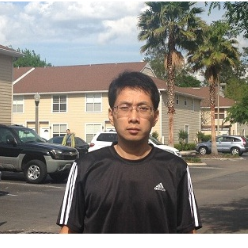 Zhao Haiquan, PhD in Engineering, Professor, Senior Member
of IEEE and the Chinese Institute of Electronics, Elsevier
Highly Cited Scholar, Global Top 0.05% Scholar (ScholarGPS),
Global Top 2% Scientist (Stanford), Academic and Technical
Leader of Sichuan Province, Outstanding Expert with
Outstanding Contributions in Sichuan Province, Winner of the
Sichuan Province Outstanding Youth Fund, Distinguished
Expert of the Haizhi Program of the Sichuan Association for
Science and Technology, has published 280 SCI papers,
received six provincial and ministerial awards including the
First Prize of Natural Science from the Chinese Society of
Automation, the Second Prize for Science and Technology
Progress from the Ministry of Education, the China Railway
Science and Technology Progress Award, and the Tang Lixin
Outstanding Scholar Award. He serves on the editorial boards
of several international SCI journals including IEEE TASLP,
IEEE TSMCA, IEEE SPL, and Signal Processing, among others.
His main research areas are signal processing, pattern
recognition, and artificial intelligence.
Zhao Haiquan, PhD in Engineering, Professor, Senior Member
of IEEE and the Chinese Institute of Electronics, Elsevier
Highly Cited Scholar, Global Top 0.05% Scholar (ScholarGPS),
Global Top 2% Scientist (Stanford), Academic and Technical
Leader of Sichuan Province, Outstanding Expert with
Outstanding Contributions in Sichuan Province, Winner of the
Sichuan Province Outstanding Youth Fund, Distinguished
Expert of the Haizhi Program of the Sichuan Association for
Science and Technology, has published 280 SCI papers,
received six provincial and ministerial awards including the
First Prize of Natural Science from the Chinese Society of
Automation, the Second Prize for Science and Technology
Progress from the Ministry of Education, the China Railway
Science and Technology Progress Award, and the Tang Lixin
Outstanding Scholar Award. He serves on the editorial boards
of several international SCI journals including IEEE TASLP,
IEEE TSMCA, IEEE SPL, and Signal Processing, among others.
His main research areas are signal processing, pattern
recognition, and artificial intelligence.
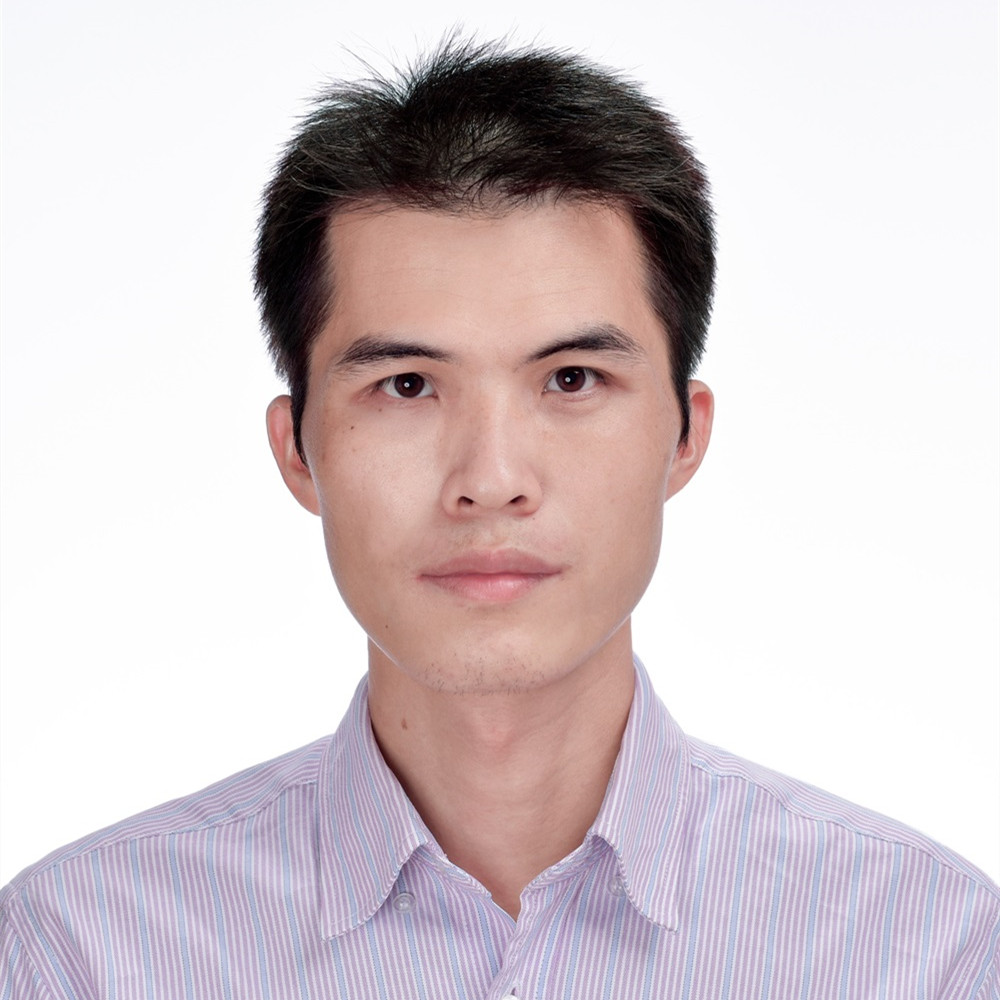 Fuyi
Huang, with a PhD in Engineering, is an Associate Professor. He obtained his
PhD in Information and Communication Engineering from Southwest Jiaotong
University in 2019, joined the School of Computer and Electronic Information
at Guangxi University in 2020, and was promoted to Associate Professor in
2023. His research interests are in adaptive filtering algorithms and their
applications (such as DOA estimation), as well as adaptation, learning, and
optimization over network.
Fuyi
Huang, with a PhD in Engineering, is an Associate Professor. He obtained his
PhD in Information and Communication Engineering from Southwest Jiaotong
University in 2019, joined the School of Computer and Electronic Information
at Guangxi University in 2020, and was promoted to Associate Professor in
2023. His research interests are in adaptive filtering algorithms and their
applications (such as DOA estimation), as well as adaptation, learning, and
optimization over network.
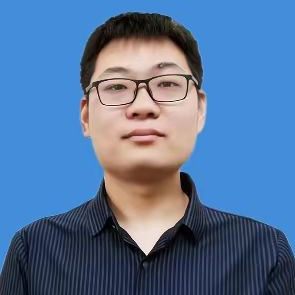 Pengwei
Wen received the B.S. degree from the College of Mathematics
and Information Sciences, North China University of Water
Resources and Electric Power, Zhengzhou, China, in 2014, and
the Ph.D. degree in information and communication
engineering from Southwest Jiaotong University, Chengdu,
China, in 2019. Since 2019, he has been working with the
School of electronic Information, Zhongyuan University of
Technology, where he is currently an Associate Professor.
His research interests include adaptive signal processing,
distributed adaptation and learning theories.
Pengwei
Wen received the B.S. degree from the College of Mathematics
and Information Sciences, North China University of Water
Resources and Electric Power, Zhengzhou, China, in 2014, and
the Ph.D. degree in information and communication
engineering from Southwest Jiaotong University, Chengdu,
China, in 2019. Since 2019, he has been working with the
School of electronic Information, Zhongyuan University of
Technology, where he is currently an Associate Professor.
His research interests include adaptive signal processing,
distributed adaptation and learning theories.